
App Development

Affordable e-commerce app development service for small businesses with mobile shopping illustration

Which e-commerce app development service offers the most affordable pricing for small businesses

Affordable e-commerce app development service for small businesses with mobile shopping illustration
Cost-effective e-commerce app development services designed to help small businesses grow online.

Small business owners often ask the same question before they start a project. They want to know which e-commerce app development services actually fit a tight budget without cutting corners on quality. The honest answer is that affordable pricing depends less on a single winning provider and more on how a company structures its rates, its team, and its process. This article looks at what shapes pricing in this space, how small businesses can compare providers fairly, and what questions deserve an answer before any contract gets signed. Getting these basics right early on saves a business owner from painful surprises once a project is already underway.

What Determines The Cost Of E-commerce App Development

The price tag on an e-commerce app rarely comes from one factor alone. Team location plays a large role, since hourly rates in South Asia or Eastern Europe sit far below rates in North America or Western Europe. App complexity matters just as much. A basic shopfront with a catalogue and checkout costs far less than an app with custom logistics, loyalty programs, or multi-vendor support.

The technology stack also shapes the final bill. A native app built separately for iOS and Android costs more than a single cross-platform build. Ongoing maintenance, bug fixes, and future updates add to the total cost of ownership too, so a small business should ask about post-launch support before it looks only at the build price. Payment gateway integration, third-party plugins, and app store fees also add small but recurring costs that a first-time buyer can easily overlook during initial budgeting.

Signs Of An Affordable Ecommerce App Development Company

A genuinely affordable e-commerce app development company shows certain traits early in the conversation. It gives a clear scope document rather than a vague quote, and it explains what falls inside and outside the budget. Small businesses can look for these signals during the first few calls:

  • A fixed-price or milestone-based quote instead of an open-ended hourly estimate
  • A portfolio with real e-commerce projects, not just generic app screenshots
  • Clear communication about the technology stack and why it fits the budget
  • A written breakdown of design, development, testing, and support costs
  • Willingness to start with a smaller MVP rather than pushing a full build immediately

Firms that skip these steps and jump straight to a headline number often add hidden charges later. A transparent e-commerce app development company treats pricing as part of the trust-building process, not just a sales tactic, and it welcomes questions rather than rushing a small business toward a signature.

Does Team Location Affect Ecommerce App Development Pricing

Location remains one of the biggest drivers behind any quote, and small businesses should not ignore it. A team based in a lower-cost region can offer the same standard of work at a fraction of the rate charged by an agency in a major Western city, largely because of differences in living costs and office overheads rather than differences in skill.

That said, location alone should not decide a hiring choice. Time zone overlap, English fluency, and communication habits matter just as much as the hourly rate on paper. A small business benefits most from a provider that combines a competitive rate with clear reporting, regular calls, and a project manager who responds quickly during the working week. Video calls scheduled at a sensible overlap hour, weekly status updates, and a shared task board all reduce the friction that can otherwise come with working across different time zones.

Which Pricing Model Suits Small Businesses Best

Small businesses usually choose between three pricing structures: fixed price, time and materials, or a dedicated team model. A fixed-price model works well for a defined project with a clear feature list, since it protects the budget from scope creep. Time and materials suits projects that change as user feedback comes in, though it needs a business owner who can track hours closely.

A dedicated team model tends to suit businesses planning several updates over the coming years rather than a single launch. Many e-commerce app development services offer a mix of these models, so a small business does not need to lock into one structure for the entire relationship. Asking a shortlisted provider which model fits a limited first-year budget is a fair and reasonable question during early discovery calls.

How To Compare Ecommerce App Development Pricing

Comparing quotes side by side helps a small business spot patterns rather than judge a single number in isolation. The table below provides a rough guide to what different project types typically involve, without providing exact figures that vary by region and provider.

Project TypeTypical ScopeTimeline
Basic storefront appCatalogue, cart, checkout, payment gateway6 to 10 weeks
Mid-size retail appStorefront plus loyalty, push notifications, order tracking3 to 5 months
Complex marketplace appMulti-vendor support, custom logistics, advanced analytics5 months or more


Providers such as Dynamic Methods often break a quote into these same categories, which makes it easier for a small business to see where its budget actually goes rather than accepting one combined figure. Many agencies advertise e-commerce app development services at a similarly low headline rate. Yet, the scope hidden behind that figure can differ quite a lot from one provider to the next, so the table above is only a starting point for a proper conversation.

Why Small Businesses Should Avoid The Cheapest Option

The lowest quote on a shortlist rarely represents the best long-term value. A team that underprices a project often cuts corners on testing, security checks, or post-launch support, and those gaps surface only after the app goes live. Rebuilding a poorly coded app costs more than paying a fair rate the first time around, and the lost sales during downtime often outweigh whatever the business saved on the original quote.

A better approach looks at value per pound rather than the raw number on a quote. A small business planning e-commerce app development should judge a provider on the working prototype, the support window, and the honesty of the timeline rather than on the headline price alone. Reading past client reviews and asking for references helps confirm whether a quoted price matched the final invoice.
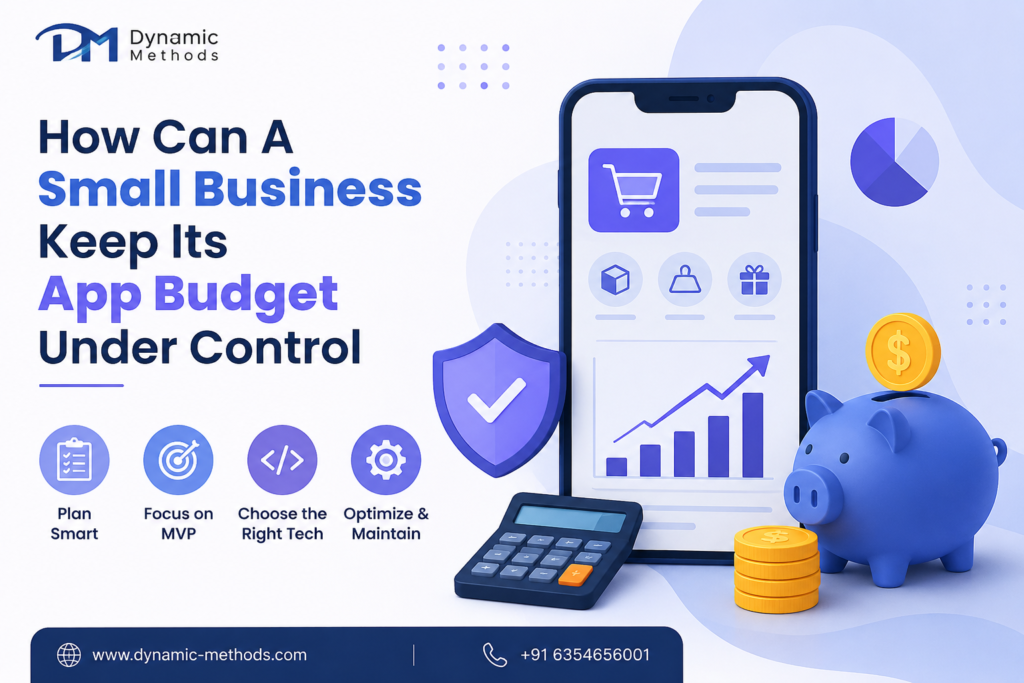
Small business app budget control illustration with smartphone, piggy bank, calculator, and growth chart
Smart strategies to keep your app development budget under control for small businesses.

How Can A Small Business Keep Its App Budget Under Control

Staying within budget starts before development begins, and a few practical habits make the biggest difference over the course of a project:

  • Define a lean minimum viable product rather than requesting every feature on day one
  • Roll out extra features in phases once the app already generates revenue
  • Reuse open-source frameworks and existing plugins instead of custom-coding routine functions
  • Set a fixed contingency of around ten percent for unexpected changes
  • Review progress against the milestone plan every few weeks rather than only at the end

Choosing a provider that reuses proven components, rather than building every function from scratch, keeps the invoice closer to the original estimate and reduces the risk of delays.

Conclusion

No single provider can claim to be the cheapest e-commerce app development company for every business, since needs and budgets differ so widely. What small businesses can control is asking the right questions, comparing quotes on the same criteria, and choosing a partner that explains its pricing clearly rather than one that simply undercuts the market. Firms like Dynamic Methods that break costs down by phase tend to give business owners a realistic picture of what good e-commerce app development services should include, which in turn helps small businesses plan a budget that holds up from the first meeting through to launch and beyond.

Frequently Asked Questions

1. How much does a basic e-commerce app cost for a small business?

A simple shopfront app with standard checkout features usually costs less than a custom build with advanced logistics, though exact figures vary by provider and region.

2. Is a fixed price or hourly rate better for a small business?

A fixed price suits a defined project scope, while an hourly rate suits a project expected to change as user feedback comes in.

3. Can a small business start with a smaller app and add features later?

Yes, a phased approach with a minimum viable product first is often cheaper and lets a business test demand before investing in extra features.

4. What questions should a small business ask before hiring a provider?

Ask about the pricing model, what falls outside the quoted scope, who handles post-launch support, and whether the team has built similar apps before.

5. Do cheaper providers always deliver lower-quality apps?

Not always, but a very low quote often signals shortcuts in testing or support, so it helps to check reviews and ask for a detailed cost breakdown first.

Which e-commerce app development service offers the most affordable pricing for small businesses Read More »

Social media app development guide showing people using mobile apps with icons like likes, comments, and notifications.

Social Media App Development Guide 2026

Social media app development guide showing people using mobile apps with icons like likes, comments, and notifications.
A complete guide to building a successful social media app with modern features and user engagement strategies.

Let’s be honest, almost everyone has thought about building the next big social platform at some point.

And why not? People are glued to their phones, communities are moving online, and niche platforms are growing faster than the big networks right now. But here’s where most people get stuck: they jump into development without a real plan and end up burning through the budget before the app even launches. This guide walks you through what actually matters.

So What Does Social Media App Development Actually Involve?

It’s more than just coding a feed and a login screen.

A social media app development involves making a place that real users will enjoy staying in. This is because you have to think about how users will meet, how users will be able to share their content, and most importantly, what will keep users coming back on day 30.

Social media applications are mostly categorised in the following manner:

  • Broad social networks where anyone can join and connect
  • Community applications focused on a particular topic
  • Media apps aimed at video, photos, or music
  • Messengers for chats with friends or groups
  • Business applications for job networking

Where your idea fits shapes everything, the features you build, the design you choose, and the budget you need.

Features That Actually Matter at Launch

Every social app needs a solid foundation. These are the features worth prioritising before anything else:

  • Profiles that feel personal. People want to express themselves. A clean profile with a photo, bio, and activity history is a baseline expectation now.
  • A feed that loads fast and stays relevant. Slow feeds kill apps. If content doesn’t load quickly or feels irrelevant, users leave and don’t come back.
  • Notifications that don’t annoy people. There’s a fine line between keeping users engaged and bombarding them. Smart, well-timed notifications make a real difference.
  • Search that actually works. Finding people and content should take seconds. Weak search functionality frustrates users more than most developers realise.
  • Some form of messaging. Even platforms that aren’t built around chat need a way for users to connect privately.
  • Privacy settings users can actually understand. People are more privacy-conscious than ever. Give them real control and make it easy to use.

Comparison Table: Types of Social Media Apps vs Key Features

FeatureGeneral NetworkNiche CommunityContent PlatformMessaging App
Public Feed
Direct Messaging
Content UploadLimited
Groups & Communities
Live StreamingOptionalOptionalOptional
Advanced Privacy ControlsLimited
Monetisation ToolsOptionalOptional
Search & DiscoveryLimited

Use this table as a starting point when defining your feature list with your development team.

How the Development Process Actually Works

  • Start with your audience, not your features. Who is this for? What does their day look like? What problem are you solving or what experience are you creating? Nail this first.
  • Build a lean feature list. Separate what the app needs at launch from what would be nice to have later. Trying to build everything at once is how budgets spiral.
  • Choose the right tech stack; React Native and Flutter are popular for mobile. Node.js handles backend well for real-time apps. AWS and Firebase are solid cloud options. Your dev team will guide this based on your specific needs.
  • Design before you build Social apps live and die by feel. A confusing interface drives people away, no matter how good the backend is. Invest in UX design early.
  • Build in sprints, test constantly. Short development cycles with proper, consistent testing detect errors before they cost more. This is non-negotiable on a project of this scale.
  • Launch small, improve fast. No app is perfect on day one. A focused launch followed by quick iterations based on real feedback is the approach that consistently works.

How Much Does Social Media App Development Cost?

Cost varies widely depending on complexity, platform, and team location.

App TypeEstimated Cost Range
Basic MVP- single platform$15,000 – $30,000
Mid-level- iOS and Android$40,000 – $80,000
Full-featured platform$80,000 – $200,000+
Enterprise social network$200,000+

These numbers move depending on your feature list, design complexity, and where your team is based. Get a detailed quote from a proper social media app company before committing to anything.

What to Look for in a Social Media App Company

Choosing the right development partner makes or breaks a project.

Find a social media application development firm which:

  • Has built up a reputation in developing live social and community applications, not just concepts
  • Communicates well and provides real timelines
  • Provides support services after the launch of the app
  • Has experience in building for both the mobile web and the desktop
  • Knows the importance of scalability since social media applications have to cater to increasing numbers of users very quickly

Dynamic Methods integrates your social media app development service, design, and development all under one roof.

Simple banner showing social media app development services with smartphone illustration, user icons, likes, and engagement elements.
A clean and modern design highlighting the importance of professional social media app development for better user engagement and performance.

Why Professional Social Media App Development Services Matter

Trying to cut costs by working with inexperienced developers usually results in:

  • Security vulnerabilities that expose user data
  • Poor performance that drives users away
  • Technical debt that makes future updates expensive
  • Missed deadlines that delay your entire go-to-market plan

Professional social media app development services exist to protect your investment and deliver a product that actually works at scale.

Conclusion

Stop guessing and start building with a team that knows exactly what it takes to launch a platform people actually use.

Dynamic Methods delivers end-to-end social media app development services, from strategy and design to development, launch, and beyond.

Start Your Project With Dynamic Methods because building a social media app is a serious investment, but with the right partner and a clear plan, it pays off.

FAQs (Frequently Asked Questions)

Q: What’s the timeline for creating a social media application?
If you focus on an MVP, you will probably require three to five months. To develop a complete multi-platform app, expect eight to twelve months.

Q: Which platform should you prefer, iOS, Android, or both?
Both platforms are preferable. But if there are budget constraints, pick either of the platforms based on where your end-users are found. With Flutter, you can create apps for both platforms simultaneously without increasing the cost.

Q: What actually keeps users coming back?
Relevance, speed, and a sense of community. Apps that feel personal and load fast hold attention far longer than ones that don’t.

Q: When should I think about monetisation?
During development, not after. Ads, subscriptions, and creator tools are much easier to build in from the start than to bolt on later.

Q: Do I really have to create my own backend?
Yes. As your user base expands, your backend will play an increasingly important role.

Social Media App Development Guide 2026 Read More »

How to choose a mobile application development company with smartphone and coding interface

How to Choose a Mobile App Development Company

Building a mobile app is exciting, but choosing the right team to bring it to life can feel confusing. With so many companies offering mobile app development services, it’s not always easy to know who to trust.

The truth is simple: your app’s success depends heavily on the people behind it. The best mobile app development company doesn’t just build your app; they take the time to help flesh out your idea, guide you in decision-making, and support your growth beyond launch.

A good partner will bring your vision to a scalable, high-performance product, whereas the wrong one can cause you to waste your money and time.

So how do you make the right choice? Let’s break it down step by step.

How to choose a mobile application development company with smartphone and coding interface
A visual guide to selecting the right mobile app development company for your business success.

Start With a Clear Vision

Before you start comparing companies, you need clarity on your own idea.

Think about what your app is trying to achieve. Is it solving a specific problem? Is it meant to improve customer experience or generate revenue? When you understand your purpose, it becomes much easier to communicate your expectations.

It is not necessary to have an exact plan, but at least a direction is useful. In such a case, development teams may recommend optimal solutions that do not lead to problems later.

What Actually Defines a Good Development Company?

Just because a company makes apps doesn’t mean that they will be right for your project. Some companies are very design-oriented, and others are very technical. The best ones strike a balance.

A good development partner will have both a technical understanding and be thinking practically. They don’t just take orders but ask questions, challenge decisions, and offer advice.

This becomes even more important if you’re looking for custom application development services, where your app needs to be tailored specifically to your business rather than built from a template.

Look Beyond the Portfolio

Most companies will show you a portfolio of work, but you need to do a little bit more.

Instead of just looking at visuals, try to understand how those apps actually perform. Are they smooth? Do they feel user-friendly? Have they solved real problems?

Experience in different sectors is usually considered beneficial as it indicates a sense of versatility. A company that has been exposed to a wide range of projects is likely to be more adaptable to surprises and unexpected situations.

Understanding Their Process Matters

A well-structured process is often what separates a professional team from an average one.

Most successful companies more or less pass through the same phases: planning, designing, developing, testing, and launching. What is really important is the fact that how they work with you on the path.

A transparent team will:

  • Keep you updated at every stage
  • Explain technical steps in simple language
  • Involve you in key decisions

When a company works this way, it builds confidence and keeps your project in line with your expectations.

Communication Can Make or Break the Project

Communication might not seem like it would be an important point, but in fact, a lot depends on how easy this will be.

When working with a mobile app development company, you should feel comfortable sharing your thoughts and asking questions. The team must provide a clear and timely answer that does not overcomplicate the issues.

If things are hard to communicate now, then once the work starts, things will be an even bigger problem.

Pricing: Think Value, Not Just Cost

Cost will always play a part in the decision-making, but the cheapest doesn’t usually work.

It is usually worth spending a bit extra if you want a good quality product, good communication, and long-term support.

Here’s a simple way to understand how pricing usually compares:

AspectLow-Cost OptionBalanced OptionPremium Option
Overall QualityBasicReliableHigh-end
FlexibilityLimitedGoodExcellent
Long-Term SupportMinimalConsistentDedicated

Why Customization Is Worth It

All businesses are unique, and this should be reflected in your application. This is where custom application development services come into play.

An app is built for you and your users. It’s more flexible, performs better, and grows with you rather than being made to fit into an existing structure.

For a long-term growing business, usually customization is the better option.

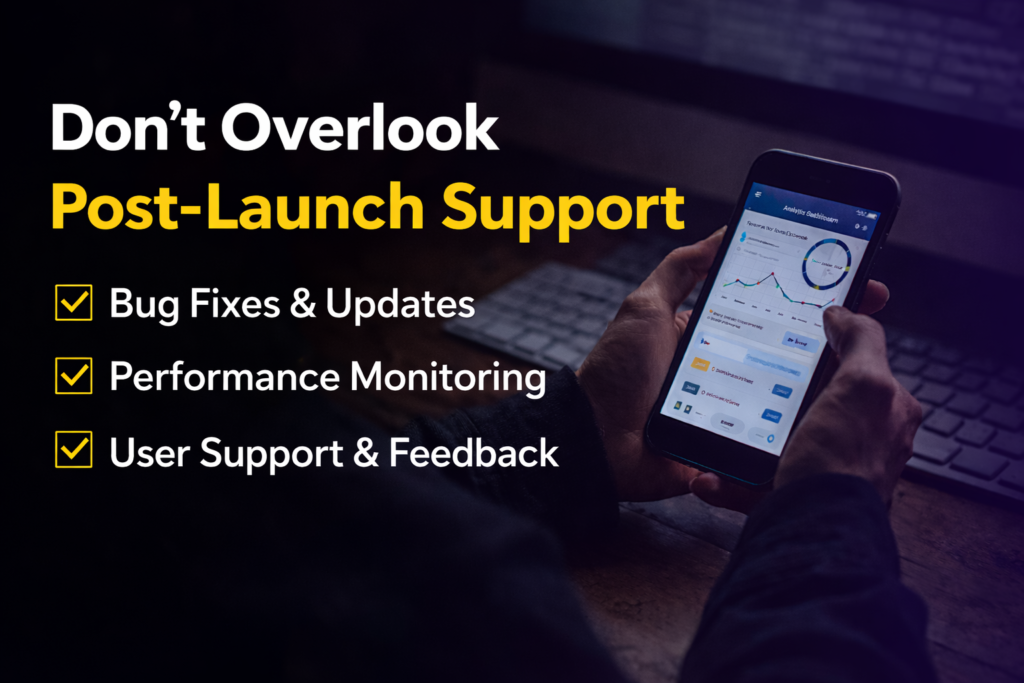
Don’t Overlook Post-Launch Support banner featuring a person holding a smartphone with an analytics dashboard, highlighting bug fixes, performance monitoring, and user support in mobile app development.

Don’t Overlook Post-Launch Support

Launching the app is not the end of the journey; it’s just the beginning.

Once it’s launched, your application will need continuous upgrades, improvements, and occasional error corrections. User expectations also tend to change, hence your application must be adaptable.

A reliable company will typically help you with:

  • Bug fixes and performance improvements
  • Feature updates based on user feedback
  • Ongoing maintenance and security updates

This is why many growing businesses prefer working with teams like Dynamic Methods, as they focus on long-term collaboration instead of just delivering a one-time project.

Watch for These Red Flags

When comparing companies, there are a couple of red flags you should look out for. Excessively low prices,  unclear communication, or vague timelines can cause later problems.

Not all problems are critical issues, but repeated ones should make you pause.

Making the Final Choice

By this stage, you’ll likely have a shortlist of companies. The final decision should come down to alignment.

Do they understand your idea? Do they communicate clearly? Do you feel confident working with them over time?

The right choice for you is not always the name brand or the highest dollar amount. It will be the one you are most confident with, and that works best for you.

Summing Up

One of the most important decisions throughout your app development journey will be the selection of your development partner.

Take your time; don’t rush into making decisions, and focus on long-term reward rather than short-term gain. 

Whether you choose a well-known name or a growing team like Dynamic Methods, the right mobile app development company won’t just build your app; they’ll help you build something that truly works.

The best choices you make today will free up time, money, and anxiety in the future.

And in the end, that’s what really matters.

Frequently Asked Questions

How do I choose the right mobile app development company?
Look for someone experienced, communicative, transparent, and who understands your business.

What do mobile app development services usually include?
They typically cover design, development, testing, launch, and maintenance.

Is custom app development really necessary?
If your app plays a key role in your business, customization helps you stand out and scale more effectively.

How long does it take to build an app?
Most apps take anywhere from a few months to several months, depending on complexity.

How to Choose a Mobile App Development Company Read More »

Man frustrated while using laptop representing how outdated website design is costing customers and affecting business growth – Dynamic Methods

Why Your Outdated Website Is Costing You Customers

Outdated website design means your website may feel old and hard to use. Have you ever opened your own website on your phone and felt frustrated?

Did it load slowly? Did you have to zoom in just to read the words?

If yes, imagine how your customers feel.

Your website is no longer just a digital presence; it’s the front door to your brand. Many companies invest in Application development services to grow digitally, yet forget that their website is the face of that growth. A website with old content is not only a matter of design but a secret killer of customers.

Let’s explore how your old website may be pushing customers away without you even realizing it.

Man frustrated while using laptop representing how outdated website design is costing customers and affecting business growth – Dynamic Methods
An outdated website can drive potential customers away. Upgrade your website to boost engagement, conversions, and business growth.

First Impressions Matter More Than Ever

You have only 5–7 seconds to convince a visitor to stay on your website.

When someone lands on a site with an outdated website design, they immediately question:

  • Is this company still active?
  • Can I trust them?
  • Are their services modern enough?
  • Will their support be outdated, too?

Customers associate your website quality with your business quality.
An old website sends the message: This company hasn’t evolved.

Would you trust a business that looks stuck in 2012?

Slow Websites = Lost Customers

Today’s users expect speed. If your website takes more than 3 seconds to load, most visitors leave.

Outdated websites usually suffer from:

  • Heavy, unoptimized images
  • Old coding structures
  • Poor hosting integration
  • Non-responsive frameworks

Speed is not just a technical factor; it directly impacts sales.

A modern business must treat its website like a working employee. If it’s slow, it’s not helping you grow.

Your Website Doesn’t Work Well on Mobile

Did you know that over 70% of users browse on mobile devices?

If your site:

  • Requires zooming,
  • Has broken layouts,
  • Shows overlapping text,
  • Or loads incorrectly,

You are losing mobile customers every single day.

Modern businesses rely on responsive development offered by a professional web development company in India to ensure seamless experiences across devices. If your website isn’t mobile-friendly, it’s already behind.

Poor User Experience Drives People Away

Customers don’t want to struggle to find information.

An outdated website usually has:

  • Confusing navigation
  • Too many clicks to reach important pages
  • Broken links
  • Old content
  • No clear call-to-action

Today’s users want:

  • Simple layouts
  • Clear messaging
  • Easy contact options
  • Fast checkout or inquiry process

If your website makes them think too much, they leave.

Your Competitors Are Already Ahead

Here’s a simple question:

If your competitor has a faster, cleaner, more modern website, where will customers go?

Your competition is investing in:

  • Modern UI/UX design
  • Smart integrations
  • SEO-friendly structure
  • Updated technology
  • Scalable platforms

If you are not transforming digitally, you are handing customers directly to competitors.

Real-World Example

Let’s take a practical example.

A mid-sized manufacturing company had a website built in 2015. It looked fine back then, but over time:

  • It wasn’t mobile responsive
  • Inquiry forms didn’t work properly
  • The website ranked poorly on search engines
  • The load time was over 6 seconds

The site was redesigned using modern tools, and performance has been optimized.

Results within 4 months:

  • 52% increase in website traffic
  • 38% more customer inquiries
  • Better search engine visibility
  • Higher trust from international clients

The business didn’t change; the website did.

SEO Suffers When Your Website Is Outdated

Modern search engines want well-designed, optimized websites.

Old websites often lack:

  • Proper SEO structure
  • Fast loading speed
  • Updated coding standards
  • Mobile optimization
  • Secure HTTPS protocols

This means your business becomes invisible online.

A Fresh, seo friendly design will improve search engine ranking and generate leads.

Outdated Websites Are Hard to Update

Older systems are often inflexible and hard to use and manage.

Adding new features like:

  • Chat support
  • Booking systems
  • Payment integration
  • Analytics tools
  • CRM connectivity

…becomes complicated or impossible.

Modern development helps you build your website flexibly and allows it to scale with your business needs.

Outdated website design vs modern website comparison showing cluttered old desktop layout on one side and clean, mobile-friendly responsive design on the other.

Comparison: Outdated Website vs Modern Website

FeatureOutdated WebsiteModern Website
Loading SpeedSlow and unoptimizedFast and performance-focused
Mobile ExperiencePoor or brokenFully responsive
SEO PerformanceLow visibilityOptimized for ranking
SecurityVulnerableSecure and updated
User ExperienceConfusing navigationSimple and intuitive
ScalabilityHard to upgradeEasy to expand
Customer TrustLooks unreliableBuilds credibility
IntegrationLimited functionalitySupports modern tools

Customers Expect Digital Confidence

Modern customers judge a business digitally before connecting with it.

They want to see:

  • Clean design
  • Updated content
  • Fast performance
  • Easy communication
  • Professional presentation

Your website should answer this question instantly:

“Can this company solve my problem today?”

If the answer isn’t obvious, they leave.

The Hidden Cost You Don’t See

An old website does not display a direct bill.

However, you pay through:

  • Lost leads
  • Lower conversions
  • Poor brand perception
  • Reduced trust
  • Weak search rankings
  • Missed growth opportunities

It’s not just a website issue, but a revenue issue too.

Conclusion: Your Website Should Work For You, Not Against You

Your website is no longer just an online brochure.
It is your sales representative, your brand ambassador, and your first impression all rolled into one.

When companies make a commitment to modernity, they aren’t just redesigning a few web pages; they’re developing a superior customer journey, increasing engagement, and delivering growth. This is why companies are partnering with skilled teams such as Dynamic Methods to modernize outdated digital presence into well-performing platforms that truly support business goals.

If you haven’t updated your website in the last couple of years, you have to ask yourself:

Is your website helping you grow or silently pushing customers away?

Frequently Asked Questions (FAQs)

1. How do I know if my website is outdated?

If your site is slow, not mobile-friendly, hard to navigate, or hasn’t been updated in 3-5 years, it likely needs modernization.

2. Will redesigning my website affect my existing customers?

A well-planned redesign improves user experience without disrupting existing customers. In fact, it makes interaction easier for them.

3. Is website redesign only about looks?

No. It includes performance, SEO, security, usability, and scalability, not just visual design.

4. How long does it take to modernize a website?

Depending on complexity, most professional upgrades take between 4 and 10 weeks.

5. Can an updated website really increase business?

Yes. Faster speed, greater SEO, and enhanced user experience have a direct impact on increased engagement and conversion rates.

Why Your Outdated Website Is Costing You Customers Read More »

Hand holding smartphone with digital network icons and text “5 Common Mistakes Businesses Make When Building Apps” by Dynamic Methods.

5 Common Mistakes Businesses Make When Building Apps

At this stage, developing an app seems like a significant move for any business. No matter whether it is for employees, customers, or an internal system, apps are becoming an integral part of expansion. 

Many companies start their journey with application development services, expecting fast results and high returns. But in reality, a lot of apps struggle or fail because of simple, avoidable mistakes.

Studies show that almost 70% of apps are removed within three months of being installed. This usually doesn’t happen because the idea is bad. It happens because the app was built without the right approach.

Let’s look at the five most common mistakes businesses make when building apps and what can be done differently.

Hand holding smartphone with digital network icons and text “5 Common Mistakes Businesses Make When Building Apps” by Dynamic Methods.
Avoid costly app development errors. Discover the 5 common mistakes businesses make when building apps with insights from Dynamic Methods.

1. Starting Without Clear Planning

The biggest mistake that businesses can make is to “start to build an app without a plan”. Most companies are now building a web application or a mobile application as their competitors are building it, or it seems like a logical “next step”.

But what a problem needs to be addressed. The purpose of the app needs to be clear, or people will not be able to use it.

For example, a local service business once built an app with many features like chat, offers, tracking, and reviews. However, users only wanted easy booking and quick updates. Because the app felt complicated, most users stopped using it within weeks.

Research shows that 42% of failed digital products fail due to a lack of market need. Planning helps you avoid this by understanding your users, their habits, and what they truly expect from your app.

2. Choosing the Wrong Type of App

Some businesses fail to select the correct medium, with some businesses that invest money in mobile apps where a website may have been more suitable, and others simply ignore their mobile customers completely.

Both web application development and mobile app development services have their own advantages. The problem starts when decisions are made without thinking about user behavior, budget, and long-term goals.

The decision really depends on who your users are and how you engage them with your business.

Here’s a simple comparison to understand the difference:

AspectWeb ApplicationMobile Application
AccessWorks in browserNeeds installation
CostUsually lowerUsually higher
UpdatesEasy and instantRequires app store updates
EngagementModerateHigher with notifications

3. Ignoring User Experience

Even a well-planned app can fail if it’s not easy to use. Many businesses focus heavily on features but forget about user experience. If an app feels slow, confusing, or cluttered, users leave.

Today, everybody wants apps to load quickly and feel very simple. Actually, over half of the people using an app or website leave because it takes longer than 3 seconds to load.

Poor navigation, unclear buttons, and too many screens are common problems. As users, if we are blocked or can’t do a simple action, we’ll quickly stop trusting. A well-designed app should gently lead us without having to put too much thought into what we are doing.

4. Treating Security and Performance as Secondary

Security is often ignored in the early stages of development. Some businesses believe it can be “fixed later.” This is risky.

Apps often store personal data, payment details, or business information. Without proper security, the app becomes an easy target. Reports show that over 60% of small businesses close within months after a major cyberattack.

It’s also crucial that it performs well. Constant crashes, bugs, or slow answers do not result in a positive user experience, and users typically will not write a complaint when they uninstall it.

This is why experienced application development services focus on security and performance from the beginning, not as an afterthought.

5. Forgetting About Long-Term Maintenance

A common mistake in the app industry is that most businesses believe development stops when the app is live. The truth is, when the app is live, development is just the beginning.

An operating system gets updated, devices get replaced, and user expectations grow. Without frequent updates, your application will quickly lose its appeal. Every few weeks, there is a new release of the most popular apps to fix bugs.

Apps that are not maintained often stop working properly after system updates. When this happens, users lose confidence and move on to better alternatives.

Planning for maintenance helps your app stay useful, relevant, and reliable over time.

Quick Checklist Before You Build an App banner with smartphone, glowing tech icons, and Dynamic Methods branding on dark blue digital background.
A professional banner highlighting key considerations before building an app, featuring a smartphone with floating app development icons and a modern digital network background.

Quick Checklist Before You Build an App

Before starting, ask yourself:

  • Do I know my target users?
  • Do I really need a mobile app, or will a web app work?
  • Is the design simple and user-friendly?
  • Is security planned from day one?
  • Do I have a maintenance strategy?

If the answer is “no” to any of these, pause and fix it first.

Why Experience Matters

Most of these mistakes happen when businesses rush into development or work without expert guidance. Building an app isn’t all about writing code, but it’s also about understanding users, planning how it will be developed, and scaling future growth.

As an experienced team, they understand design and performance, and also how to deal with long-term usage. The teams can quickly find the problems and guide the business to escape from various typical pitfalls, such as bad usability or security. 

Companies like Dynamic Methods focus on building apps that work smoothly today and continue to deliver value as business needs evolve.

FAQs

Is it better to start with a web app or a mobile app?
It depends on your audience, as web apps offer easy access while mobile apps provide higher user engagement.

How long does app development usually take?
Simple apps take around two to three months, while complex apps can take six months or more.

Is maintenance really necessary after launch?
Yes, regular updates are needed to keep the app secure, stable, and compatible with new devices.

How much does it cost to build an app?
The cost depends on features, design, and platform, with simpler apps costing less than advanced ones.

Can I upgrade my app later if my business grows?
Yes, apps can be expanded easily if scalability is planned during development.

Why do some apps fail even after good development?
Apps often fail due to poor marketing, lack of updates, or ignoring user feedback.

Do small businesses really need an app?
Not always, as some small businesses perform better with a strong web application first.

Summing Up

Building an app is not about just being present online; it is about making something that can serve the purpose for the user and solve their needs. Most applications are unsuccessful for quite common reasons: bad plan, wrong platform, bad UX, insecurity, or no maintenance strategy for a long time.

A successful app starts with clear goals and a strong understanding of user needs. Whether you choose web application development or mobile app development services, focusing on simplicity, performance, and reliability always leads to better results.

Working with the right team also makes a big difference. Companies like Dynamic Methods help businesses build apps that are well-planned, secure, and ready to grow, using the right application development services from the very beginning.

When businesses take a thoughtful and structured approach, their apps are more likely to gain user trust, stay relevant, and deliver long-term value.


Read More- Top 10 Proven Steps to Build a Scalable Mobile App from Scratch in 2026

5 Common Mistakes Businesses Make When Building Apps Read More »

Illustration showing a laptop with coding elements and graphics, featuring the text “Is Web Development a Good Career in 2026?” and the Dynamic Methods logo.

Is Web Development a Good Career in 2026?

If you have been wondering, “Is web development still a good career choice in 2026?”, you are definitely thinking in the right direction. Today, almost every company, small or large, depends on digital platforms to reach customers and grow its brand. 

This is exactly why working with a web development company in India or becoming a web developer yourself continues to offer huge opportunities in 2026. Web development is no longer just about writing code. It is about designing experiences, solving business problems, and creating smooth online journeys for users. 

Whether it’s a simple business website, an e-commerce store, a booking app, or a complete digital platform, companies need skilled developers who can bring their ideas to life.

Why Web Development Remains a Strong Career Choice in 2026

The tech world changes quickly, but the need for well-built websites and applications only increases with time. In 2026, web development continues to stay strong for several reasons, and if you look around, you’ll notice how deeply the digital shift has impacted everything from shopping and banking to education and entertainment. 

Here are a few major reasons why this field is growing faster than ever.

1. Businesses Are Fully Transitioning to Digital

Almost every business has realized that having a professional online presence is no longer optional. It’s a basic requirement. Even local stores, home-based entrepreneurs, and small service providers are understanding the importance of online branding. This change has massively increased the need for expert developers, designers, and digital creators.

To keep up with the competition, companies often hire a trusted web development company to build strong, secure, and scalable websites that help them stay ahead. A good website builds trust, improves conversions, and supports long-term growth, which is why developers remain in high demand.

2. Increased Focus on User Experience (UX)

A website is not just a digital brochure anymore. It’s a place where customers make decisions. Modern users expect speed, simplicity, security, and comfort while using a website. If a website loads slowly, looks outdated, or feels confusing, users leave immediately.

A popular line that many digital marketers use says:
“Your website is your first impression, make it a good one.”

Because of this, developers with strong UX knowledge are highly valued. In 2026, companies prefer hiring developers who understand how real people interact with websites, not just how to write clean code.

3. Ongoing Updates, Maintenance, and New Features

Many people think web development ends once a website is launched. That’s not true. In fact, the real work often starts after the launch. Every business needs regular updates, new pages, security patches, redesigns, faster performance, and new features to stay relevant.

This has increased the demand for web development services that support long-term maintenance and monthly development work. It also creates a stable stream of projects for developers, agencies, and freelancers.

4. Rise of E-Commerce and Online Marketplaces

Online shopping is at its highest point ever, and by 2026, the number of global digital shoppers will have grown drastically. From fashion and electronics to groceries and medicine, everything is purchased online.

This increase in online shopping has naturally increased the need for:

  • custom e-commerce websites
  • secure payment integrations
  • inventory systems
  • personalized shopping experiences

Is Web Development a Stable Job in 2026?

The simple answer is yes, web development is not only stable but also one of the most future-proof careers today. Here are a few reasons why this field continues to offer security and growth:

1. Remote and Hybrid Work Options

Developers can work from anywhere. In 2026, many companies prefer remote teams because it saves time and costs. This has opened doors for developers to work worldwide, even if they live in smaller towns or suburban areas.

2. Freelancing and Contract-Based Opportunities

Many developers enjoy freelancing because it gives them flexibility and unlimited earning potential. Platforms like Upwork, Fiverr, and LinkedIn continue to receive high demand for web projects every day.

3. Global Demand for Digital Skills

Web development is not restricted by geography. A developer in India can easily work with clients in the USA, UK, Canada, or Australia. This global demand creates a wide range of opportunities.

4. High Income Potential

Skilled developers earn well, whether they work full-time, part-time, or freelance. As experience grows, so does their earning power. Specialized developers like React developers, WordPress experts, and UX-focused developers can charge even higher rates.

Which Web Development Skills Matter the Most in 2026?

Even though web development continues to be a strong field, the skills required keep evolving. The following skills not only make developers more capable but also help them stand out during interviews and client projects. In 2026, developers who focus on the following skills enjoy better opportunities and higher demand:

  • Responsive and mobile-friendly design
  • Front-end frameworks like React, Vue, and Angular
  • Back-end languages such as Node.js, PHP, and Python
  • UI/UX understanding
  • Website performance optimization
  • API integrations and automation
  • Cybersecurity basics
  • Knowledge of CMS platforms like WordPress or Shopify
  • Cloud hosting and deployment basics

Why India Continues to Be a Web Development Hub in 2026

A professional web development company often offers complete solutions from design and development to digital marketing and ongoing support in India. This is one of the reasons Indian developers and agencies continue to get global recognition. 

Companies around the world prefer partnering with Indian developers because of:

  • high skill levels
  • strong technical education
  • competitive pricing
  • reliable delivery
  • excellent communication

Who Should Choose a Career in Web Development?

Even if you are a beginner, you can start learning step by step. The field is open to students, working professionals, freelancers, and career switchers.

Web development is ideal for anyone who:

  • enjoys solving problems
  • likes designing or creating things
  • wants a flexible and future-ready career
  • loves technology
  • wants remote or freelance options
  • wants long-term growth and good income

Summing Up

Web development remains one of the most promising and future-focused careers in 2026. With digital transformation growing faster than ever, the need for talented developers continues to rise across all industries and all business sizes. 

Whether someone wants to work full-time, explore freelancing, or build their own digital brand, this field offers flexibility, growth, creativity, and long-term stability. 

And if you ever feel ready to begin your journey or upgrade your online presence, Dynamic Methods is right there to support you with expert guidance and reliable solutions as you move forward. 

Web development is not just a career anymore; it’s a powerful gateway to endless possibilities in the digital world.

Is Web Development a Good Career in 2026? Read More »

"Illustration showing two people working on application interfaces, with one person using a laptop at a desk and another standing beside a large mobile screen interface. The text reads ‘Why Application Maintenance Is Crucial for Business Continuity in 2026’ with the Dynamic Methods logo at the top and website URL at the bottom."

Why Application Maintenance Is Crucial for Business Continuity in 2026

Technology today is not just a support system; it has become the backbone of almost every business operation. From customer service and sales to logistics and accounting, digital applications play a crucial role. Because of this, reliable application maintenance and support have become more important than ever.

But think for a moment: What if your most important application suddenly failed during your busiest hour? Can your team continue working? Would your customers wait? Most businesses discover their vulnerabilities only after something breaks, and by then, the damage is already done.

That’s why application maintenance is no longer optional. In 2026, it has become a strategic requirement for business continuity, security, performance, and growth.

Why 2026 Makes Application Maintenance Even More Critical

The year 2026 ushers in a landscape of rapid technological advancements. With the rise of automation, accelerated adoption of cloud computing, and heightened user expectations, businesses today rely on smooth, uninterrupted digital experiences to stay competitive. In such an environment, even a few minutes of downtime can have ripple effects, disrupting operations, eroding customer trust, and causing significant financial losses.

With these elevated risks, businesses are now more dependent on application maintenance services to ensure their systems are up-to-date, secure, and resilient against disruptions. In fact, modern businesses understand that maintenance isn’t just about reacting to problems but proactively preventing them before they even arise.

When an application fails, the consequences extend far beyond just a broken tool. The impacts can be widespread, affecting:

  • Workflow automation
  • Customer transactions
  • Sales and marketing activities
  • Internal team communication
  • Inventory and supply chain operations

1. Keeping Daily Operations Smooth and Uninterrupted

Applications power virtually all aspects of day-to-day business activities. When applications are functioning optimally, operations run like clockwork. However, if they go down, entire workflows can grind to a halt. Think of it like a car needing regular maintenance to avoid an unexpected breakdown. Applications need consistent care for the same reason to ensure they’re operating at full capacity when you need them most.

Regular maintenance helps businesses:

  • Detect problems early before they evolve into major failures
  • Prevent system crashes that can halt workflows
  • Ensure smooth functioning even during peak hours, like during product launches or busy shopping seasons
  • Maintain reliable performance round-the-clock, so employees and customers can always count on the system

2. Protecting Your Business Against Modern Cyber Threats

As we look toward 2026, cyber threats are becoming more sophisticated and harder to predict. Hackers are constantly on the lookout for vulnerabilities, whether it’s outdated software, weak security patches, or exposed entry points in your digital infrastructure. In such an environment, waiting too long to address security vulnerabilities can lead to disastrous consequences. Application maintenance becomes your first line of defense against these growing threats.

Regular maintenance ensures that businesses can:

  • Address and fix security loopholes before they are exploited
  • Install critical software updates that protect against new vulnerabilities
  • Enhance authentication systems to make unauthorized access more difficult
  • Safeguard sensitive customer data from breaches, ensuring your brand remains trustworthy

3. Improving User Experience and Customer Retention

User expectations are at an all-time high. Customers demand fast, seamless, and bug-free digital experiences, especially on mobile platforms, where usage is growing exponentially. Any glitch, slow loading times, or crashes can prompt users to abandon your application for a competitor’s service. 

By prioritizing mobile app maintenance services, businesses can ensure that they provide a consistent, hassle-free experience across all devices, which is crucial in 2026 as mobile app usage continues to surge.

Regular mobile app maintenance services help businesses to:

  • Improve the speed and responsiveness of mobile applications
  • Maintain a consistent interface across different mobile devices, providing users with a reliable experience
  • Eliminate bugs and errors that could disrupt mobile navigation
  • Keep users satisfied, which in turn supports customer retention

4. Reducing Long-Term Costs and Avoiding Expensive Breakdowns

It’s tempting for some businesses to delay maintenance in the hopes of saving money in the short term. But the truth is, this strategy almost always backfires. What seems like a cost-saving measure now can turn into an expensive repair down the road. Small issues left unchecked can snowball into significant failures that require costly emergency fixes.

One simple truth remains: “Regular care is always cheaper than emergency care.”

By staying on top of application maintenance, businesses can:

  • Prevent unexpected repair costs that could arise from unforeseen breakdowns
  • Avoid the financial impact of long outages
  • Extend the lifespan of applications and delay costly rebuilds or replacements
  • Improve overall operational efficiency by keeping systems optimized and running smoothly

5. Staying Compatible with New Technologies and Integrations

The pace of technological change continues to accelerate. New tools, APIs, devices, and operating systems are introduced constantly, and businesses must adapt quickly to stay competitive. Without regular application maintenance, your system could quickly become outdated, which would hurt your ability to integrate with new tools or perform at optimal levels.

Ongoing maintenance ensures that businesses can:

  • Integrate seamlessly with new technologies, services, or APIs
  • Ensure compatibility across multiple devices and platforms
  • Quickly adopt new features, functionality, or security protocols
  • Maintain long-term digital stability by staying current with technological trends

6. Boosting Application Performance and Supporting Scalability

As your business grows, so do the demands on your systems. Increased traffic, larger data volumes, and growing user expectations can put pressure on your infrastructure. An unmaintained application can struggle to keep up, leading to performance degradation. Regular maintenance can alleviate this pressure and support scalability, ensuring that your application can grow with your business.

Maintenance plays a key role in:

  • Monitoring and improving load capacity to prevent slowdowns during traffic spikes
  • Optimizing server response times to provide fast user interactions
  • Maintaining database efficiency to handle growing data volumes
  • Monitoring system health indicators to prevent potential failures

7. Supporting Employee Productivity and Reducing Workflow Stress

Your employees rely on applications to get their work done. If those tools aren’t functioning properly, productivity takes a hit, and frustration levels rise. A seamless and well-maintained internal system enables smoother communication and collaboration, minimizing stress and downtime.

Regular maintenance enhances employee performance by:

  • Improving the speed and usability of applications
  • Minimizing disruptions to the workflow that might arise from system failures
  • Ensuring consistent, dependable performance, which boosts morale
  • Reducing downtime, allowing teams to focus on high-priority tasks instead of troubleshooting technical issues

8. Meeting Industry Compliance and Digital Standards

With ever-changing regulations around data protection, digital transactions, and user privacy, staying compliant is more critical than ever. Outdated applications or systems that are not properly maintained often fail to meet these evolving standards, putting your business at risk for legal penalties and loss of customer trust.

Routine maintenance ensures that businesses:

  • Remain compliant with industry regulations and digital standards
  • Avoid costly fines or legal actions related to non-compliance
  • Protect customer trust by ensuring that personal and financial data is handled securely
  • Maintain clean, accurate records, reducing the risk of audits or disputes

9. Strengthening Brand Reputation and Reducing Customer Churn

In a highly competitive marketplace, customers gravitate toward brands that offer reliable, seamless experiences. A well-maintained application reflects the reliability and professionalism of your brand. If your application frequently crashes or feels outdated, customers are quick to notice and just as quick to leave for a competitor.

Application maintenance contributes to your brand’s reputation by:

  • Building trust with customers through consistent, dependable digital experiences
  • Fostering customer loyalty by meeting or exceeding user expectations
  • Reducing churn by minimizing frustration and disruptions
  • Ensuring that your application consistently performs well, which supports long-term customer retention

Summing Up

As we move into 2026, application maintenance has emerged as a fundamental pillar of business continuity. Whether your goal is to avoid downtime, strengthen security, improve performance, or prepare for future growth, regular application maintenance is an investment that will pay off in spades.

For businesses looking to stay ahead of the curve and deliver exceptional digital experiences, investing in a comprehensive maintenance plan is crucial. Reliable, hands-on support will not only protect your systems but also support your broader business objectives, ensuring long-term success in an increasingly digital world.

When you’re ready to take your digital infrastructure to the next level with the right maintenance support, Dynamic Methods is here to guide and assist you with complete confidence and care.

Why Application Maintenance Is Crucial for Business Continuity in 2026 Read More »

Top 10 proven steps to build a scalable mobile app from scratch in 2026 – Dynamic Methods

Top 10 Proven Steps to Build a Scalable Mobile App from Scratch in 2026

Have you ever wondered why some mobile apps effortlessly handle millions of users while others crash under pressure? As technology continues to advance at lightning speed, scalability isn’t optional; it’s essential. Businesses that plan for growth from the start save time, money, and stress later.

Whether you’re a startup founder, entrepreneur, or business owner, learning how to build a scalable app from scratch can make all the difference. Partnering with an experienced Mobile App Development Company gives you a solid foundation to turn your idea into a reliable, growth-ready product.

Let’s explore the top 10 proven steps to build a scalable mobile app from scratch in 2026, explained in a simple, practical way.

1. Define Your Vision and Purpose

Every great app begins with a clear purpose. Before you start development, take the time to understand what problem your app will solve, who your target users are, and how your solution will stand out from competitors. This clarity will shape every design and technical decision you make later.

An expert mobile application development company can help you refine your vision and transform it into a well-structured plan that balances innovation with user needs.

2. Build a Minimum Viable Product (MVP)

Instead of building everything at once, focus on creating an MVP, a simplified version of your app that includes only the core features. Launching early helps you test your concept in real conditions, gather user feedback, and make improvements before investing heavily.

Some of the world’s top apps, like Uber and Instagram, began as MVPs before becoming household names. A smart, phased approach will help you scale faster and more efficiently.

3. Choose the Right Technology Stack

Your app’s future depends heavily on the technology behind it. The right frameworks and programming languages ensure flexibility, security, and long-term performance. In 2026, popular choices include Flutter and React Native for cross-platform apps, Swift for iOS, and Kotlin for Android. Cloud platforms like AWS or Google Cloud are excellent for reliable hosting.

A trusted Mobile App Development Company can guide you through these choices, helping you select tools that align with your goals and budget while keeping scalability in mind.

4. Design for Scalability from the Start

Scalability isn’t something you bolt on later; it must be part of your app’s DNA. A well-planned architecture allows your app to grow without performance issues. Focus on building a structure that can handle more users, data, and features without major redesigns.

Keeping your design modular and optimizing your database for speed and reliability will help ensure smooth performance as your app attracts more users.

5. Prioritize User Experience (UX)

No matter how advanced your technology is, your app will only succeed if people enjoy using it. A seamless user experience keeps people coming back. Simple navigation, fast loading times, and intuitive design make a huge difference.

As Steve Jobs once said, “Design is not just what it looks like and feels like. Design is how it works.” A professional mobile application development company will craft a design that not only looks appealing but also works smoothly, even as your user base grows.

6. Strengthen Your Backend Infrastructure

The backend is the powerhouse of your app. It handles data processing, user requests, and communication between features. A strong backend must be flexible, secure, and scalable. Using microservices architecture, cloud hosting, and well-managed APIs allows your app to handle increasing traffic without slowing down.

Building on a solid backend ensures your app stays stable and performs consistently, no matter how much demand grows.

7. Implement Security from the Start

With more users and data comes more responsibility. Security should be part of your app from day one, not an afterthought. Use SSL encryption for communication, include secure authentication options like two-factor login, and run frequent security tests.

Strong security builds trust. Partnering with a team that offers Mobile App Development services ensures your app meets global security standards and keeps user data protected at all times.

8. Test Thoroughly and Continuously

Testing is what transforms a good app into a great one. Before launch, every part of your app, from performance and functionality to design, should be tested carefully. Real users should also try it to provide honest feedback.

Testing doesn’t stop after launch; ongoing checks help catch new bugs and maintain a smooth experience as your app evolves. Continuous testing is key to keeping your app reliable and scalable.

9. Use Analytics to Drive Smart Decisions

Once your app is live, data becomes your best friend. Tracking user behavior helps you understand how people interact with your product. Tools like Google Firebase or AppDynamics give insights into what’s working and what needs improvement.

An experienced Mobile App Development Company can help you interpret this data to make informed updates. With analytics guiding your decisions, you can fine-tune performance, improve retention, and identify new growth opportunities.

10. Plan for Continuous Updates and Maintenance

Launching an app is only the beginning. Technology, devices, and user expectations change constantly, so your app must keep evolving. Regular updates and maintenance ensure compatibility, fix bugs, and improve performance.

Working with a dependable mobile application development company for long-term support helps keep your app secure, current, and ready to adapt to new technologies. Consistent updates are a sign of professionalism and care, both of which help you build long-term trust with users.

Bonus Step: Listen to Your Users

Your users are your biggest asset. Their feedback reveals what works and what doesn’t. Listening to their needs helps you shape updates that matter most. Apps that evolve based on user insights grow stronger and stay ahead of the competition.

Building strong communication channels, like feedback forms or in-app reviews, keeps your app aligned with user expectations.

The Bottom Line

Building a scalable mobile app from scratch in 2026 takes planning, patience, and the right technical direction. When you follow these ten proven steps, you set your app up for long-term success, one that performs well, grows effortlessly, and keeps users happy.

If you’re ready to turn your app idea into a powerful, scalable product, Dynamic Methods is here to help bring your vision to life with the expertise and dedication it deserves.

Top 10 Proven Steps to Build a Scalable Mobile App from Scratch in 2026 Read More »

Illustration showing two professionals discussing data analytics on a computer screen with the title “Digital Transformation 2025: The Role of Indian Software Development Companies” and Dynamic Methods logo.

Digital Transformation 2025: The Role of Indian Software Development Companies

“Change is the only constant.” This saying perfectly fits today’s digital era. Businesses across the world are reinventing how they work, connect, and deliver value. In 2025, digital transformation isn’t just a buzzword it’s the key to survival, powered by innovative software development services that help companies stay competitive and agile. From small startups to global enterprises, everyone is embracing digital-first strategies to stay ahead.

At the heart of this transformation stands one major player: Indian software development companies. Known for their innovation, skill, and cost-effective solutions, they’re shaping the global digital future in more ways than one.

But how exactly are they doing it? Let’s get started.

What Does Digital Transformation Really Mean in 2025?

Before exploring India’s role, let’s quickly understand what digital transformation means in today’s world.

It’s not just about moving data to the cloud or using AI. It’s about rethinking entire business models using technology to make smarter decisions, improve customer experiences, and boost efficiency.

And to make all of this happen, businesses need reliable software development services a space where India continues to shine.

In 2025, digital transformation is all about:

  • Automation through AI and machine learning
  • Data-driven decisions using analytics and predictive tools
  • Personalized experiences through custom software solutions
  • Cloud-based scalability for speed and flexibility
  • Cybersecurity to protect digital assets

Why India Leads the Global Software Development Industry

India’s reputation as a global IT hub isn’t new, but its influence has grown even stronger in 2025. Here’s why:

  1. Vast Talent Pool:
    India produces millions of skilled engineers and developers every year. This massive talent base allows companies to deliver high-quality custom software development at scale.
  2. Cost-Effective Solutions:
    Compared to Western markets, Indian firms offer top-notch software development services at a fraction of the cost without compromising on quality. This balance of affordability and excellence attracts global clients.
  3. Tech-Savvy Ecosystem:
    With growing startup hubs like Bengaluru, Hyderabad, and Pune, India has become a breeding ground for innovation. Many of these companies experiment with AI, blockchain, IoT, and cloud technologies to drive transformation.
  4. Global Trust:
    From Silicon Valley startups to Fortune 500 giants, countless organizations trust Indian developers for critical projects. The long track record of reliability, transparency, and timely delivery makes India a preferred partner.

The Role of Indian Software Development Companies in Digital Transformation

Indian firms aren’t just coding applications they’re enabling entire digital journeys. Here’s how they’re contributing in 2025:

1. Building Custom Software for Modern Businesses

Every business has unique needs, and ready-made solutions don’t always fit. This is where custom software development comes in.

Indian developers are experts at creating tailor-made software that aligns with specific business goals. Whether it’s automating a supply chain, improving customer service, or developing a new SaaS platform, Indian companies deliver flexible and future-ready solutions.

2. Accelerating Innovation with Emerging Technologies

AI, machine learning, blockchain, and cloud computing are redefining how businesses operate. Indian companies are at the forefront of integrating these technologies into real-world applications.

For instance, AI-powered chatbots developed in India are helping global retailers offer 24/7 customer support. Cloud-based applications built by Indian teams are enabling businesses to scale faster and save costs.

3. Strengthening Cybersecurity and Data Privacy

As digital adoption grows, so do cyber threats. Indian software development companies now prioritize security-first development. They build software that not only performs well but also protects sensitive data using encryption, multi-factor authentication, and secure coding practices.

4. Supporting Global Businesses 24/7

With advanced communication tools and flexible time zones, Indian teams provide around-the-clock development and maintenance support. This global delivery model ensures faster turnaround times and constant project monitoring.

5. Driving Digital Inclusion

Beyond big corporations, many Indian IT companies also help small and medium businesses go digital especially in developing regions. Affordable software development services empower smaller players to compete on a global scale.

Top Trends Shaping Digital Transformation in 2025

Indian developers are adapting these trends quickly, helping global clients stay ahead in the tech race. The pace of change is faster than ever. Here are some trends Indian software developers are focusing on this year:

  • AI and Automation Everywhere: Automating repetitive tasks and using AI to improve decision-making.
  • Cloud-First Approach: Businesses prefer cloud-based platforms for flexibility and scalability.
  • Low-Code and No-Code Development: Enabling faster app creation even for non-technical users.
  • Edge Computing: Bringing computing power closer to where data is generated for quicker insights.
  • Green Software Development: Building energy-efficient software to support sustainability goals.

Why Businesses Choose Indian Software Development Companies

As a result, businesses not only save money but also gain a competitive digital edge. Still wondering why so many global brands rely on Indian developers? Partnering with a leading software development company in India allows organizations to access world-class talent, modern technology, and scalable solutions that drive growth and innovation. 

Here are the top reasons:

  • Proven Expertise: Years of experience across industries healthcare, finance, retail, logistics, and more.
  • Agile Development Models: Faster delivery through agile and DevOps practices.
  • Transparent Communication: Clear reporting and open collaboration at every stage.
  • End-to-End Services: From strategy to development and ongoing support.

How to Choose the Right Software Development Company in India

A trustworthy partner will not just deliver a product but a digital experience that grows with your business. If you’re planning to partner with an Indian firm, here’s what to look for:

  1. Check Their Portfolio: See if they’ve worked on projects similar to yours.
  2. Evaluate Technical Skills: Make sure they specialize in your preferred technologies (e.g., React, Python, AI, etc.).
  3. Look for Reviews and Testimonials: Genuine client feedback tells you a lot about reliability.
  4. Discuss Communication and Support: Clear communication is key to successful collaboration.
  5. Understand Their Process: Ask about their development methodology, timelines, and maintenance plans.

The Future: Digital Transformation Beyond 2025

The journey doesn’t stop here. As technologies like quantum computing, 5G, and AI evolve further, software development services will play an even greater role.

India, with its deep technical expertise and innovative mindset, will continue to lead this change. By 2030, experts predict that Indian software exports will double, and many local firms will become global leaders in product development.

As one industry leader put it, “The future of digital transformation is being coded in India.”

Summing Up

Digital transformation in 2025 is more than just adopting new tools it’s about creating smarter, faster, and more connected businesses.

And behind this movement, Indian software development companies are the driving force delivering innovation, reliability, and scalability through custom software development and cutting-edge software development services.

At Dynamic Methods, we believe in helping businesses harness the power of technology to drive meaningful digital transformation and long-term growth.

If your business is ready to step into the future, partnering with the right software development company in India could be the smartest decision you make this year.

Digital Transformation 2025: The Role of Indian Software Development Companies Read More »

Illustration showing how AI is transforming application maintenance and support in 2025, with a robot on a smartphone screen and two people standing nearby, representing AI-driven technology by Dynamic Methods.

How AI Is Transforming Application Maintenance and Support in 2025

Illustration showing how AI is transforming application maintenance and support in 2025, with a robot on a smartphone screen and two people standing nearby, representing AI-driven technology by Dynamic Methods.

“The future belongs to those who prepare for it today.” – Malcolm X. In a digital-first world, businesses run on applications. From customer-facing platforms to backend enterprise systems, applications drive efficiency, user experience, and growth. 

But maintaining these applications has never been simple; bug fixes, performance issues, downtime, and growing user demands make application maintenance and support a critical yet challenging function.

Now, enter Artificial Intelligence (AI). By 2025, AI will no longer be just a buzzword; it will have become a game-changer for IT operations, reshaping how organizations approach Application Maintenance Services. Whether it’s predictive monitoring, automated bug detection, or intelligent ticket resolution, AI is bringing unmatched speed, accuracy, and cost savings to this space.

So, how exactly is AI transforming application maintenance and support, and why should businesses pay attention? Let’s dive deeper.

1. From Reactive to Proactive Support

Traditionally, IT teams worked reactively. An application issue occurred → the system went down → users complained → support teams scrambled to fix it. This reactive cycle often led to customer frustration, revenue loss, and longer downtimes.

AI changes this dynamic. With predictive analytics and machine learning, AI can detect anomalies and predict failures before they happen. Imagine receiving an alert about a potential server crash hours before it occurs. Instead of firefighting, IT teams can prevent downtime altogether.

This proactive approach not only reduces disruptions but also improves user satisfaction, a win-win for businesses and customers.

2. Automated Bug Detection and Resolution

Every business knows the pain of bugs, small glitches that can lead to massive problems. Manually identifying and resolving bugs is time-consuming, error-prone, and often expensive.

AI-powered tools can now scan millions of lines of code in minutes, identifying anomalies, inefficiencies, and potential risks. What once took weeks can now be achieved in hours. Even better, AI-driven solutions are starting to self-heal applications, automatically fixing minor bugs without human intervention.

This automation allows IT teams to focus on innovation rather than repetitive maintenance tasks, driving higher productivity.

3. Smarter Ticket Management with AI Chatbots

Support tickets are the backbone of application maintenance, but they often pile up, overwhelming IT helpdesks. AI is redefining ticket management through intelligent chatbots and virtual assistants.

Instead of waiting for human agents, users can interact with AI-powered assistants that provide instant resolutions to common issues. These chatbots can triage requests, classify tickets, and even escalate complex cases to the right human experts, all while learning and improving over time.

The result? Faster ticket resolution, reduced response times, and happier users.

4. Cost Savings Through Intelligent Resource Allocation

Application maintenance and support are expensive. Hiring specialized staff, managing complex systems, and addressing unexpected outages all contribute to rising costs.

AI helps by optimizing resource allocation. For example, AI can analyze historical data to predict peak usage times and allocate IT resources accordingly. It can also recommend the most efficient way to distribute workloads, reducing unnecessary expenditures.

According to industry reports, businesses using AI in their Application Maintenance Services have already seen cost savings of up to 30%. That’s not just an improvement, it’s a competitive advantage.

5. Improved Security and Compliance

Security breaches are among the biggest threats to businesses today. Applications that are poorly maintained are prime targets for cybercriminals.

AI is playing a vital role in enhancing application security. Machine learning algorithms can detect unusual behavior, flag suspicious logins, and monitor transactions in real time. AI can even suggest patches and updates before vulnerabilities are exploited.

For businesses that operate in regulated industries, AI-driven compliance monitoring ensures applications meet industry standards without overwhelming IT teams with manual checks.

6. Personalized User Experience

Beyond technical support, AI is also enhancing the end-user experience. Applications maintained with AI-driven insights can deliver more personalized and seamless interactions.

For instance, AI can track how users interact with an app, predict their needs, and proactively recommend solutions. This doesn’t just keep the application running smoothly; it strengthens brand loyalty by making users feel valued and understood.

7. The Human + AI Collaboration

It’s important to remember that AI doesn’t replace humans; it empowers them. Application maintenance is complex, and while AI handles repetitive tasks, humans bring creativity, strategy, and empathy.

The most successful IT teams in 2025 will be those who leverage AI as a partner, not a replacement. This human-AI collaboration ensures businesses achieve both efficiency and innovation.

Real-World Example

Take the case of global enterprises adopting AI-driven maintenance. A leading financial services company reported that by deploying AI-powered predictive monitoring, they reduced downtime by 40% and saved millions annually in IT costs.

This isn’t just theory; AI in application maintenance and support is delivering measurable business results worldwide.

What Businesses Should Do in 2025

The earlier you integrate AI into your maintenance strategy, the stronger your competitive edge will be. If you’re still relying on manual processes for maintenance and support, you’re already falling behind. Here are a few steps to get started:

  1. Assess your current application landscape – Identify repetitive tasks that can be automated.
  2. Invest in AI-powered tools – From monitoring to ticket management, explore AI-driven platforms.
  3. Upskill your IT teams – Train staff to work alongside AI, not against it.
  4. Start small, scale fast – Begin with pilot projects and expand once results are proven.

Wrapping Up

Application maintenance and support is no longer just about keeping the lights on; it’s about driving business growth, ensuring reliability, and delighting customers. AI is making this possible by transforming outdated, reactive processes into intelligent, proactive solutions.

As businesses step into the future, those who embrace AI in Application Maintenance Services will enjoy faster response times, reduced costs, and improved customer satisfaction.

At Dynamic Methods, we believe the future of IT lies in blending human expertise with AI-driven innovation. The organizations that adapt today will be the leaders of tomorrow.

So, are you ready to transform your applications with AI?

How AI Is Transforming Application Maintenance and Support in 2025 Read More »